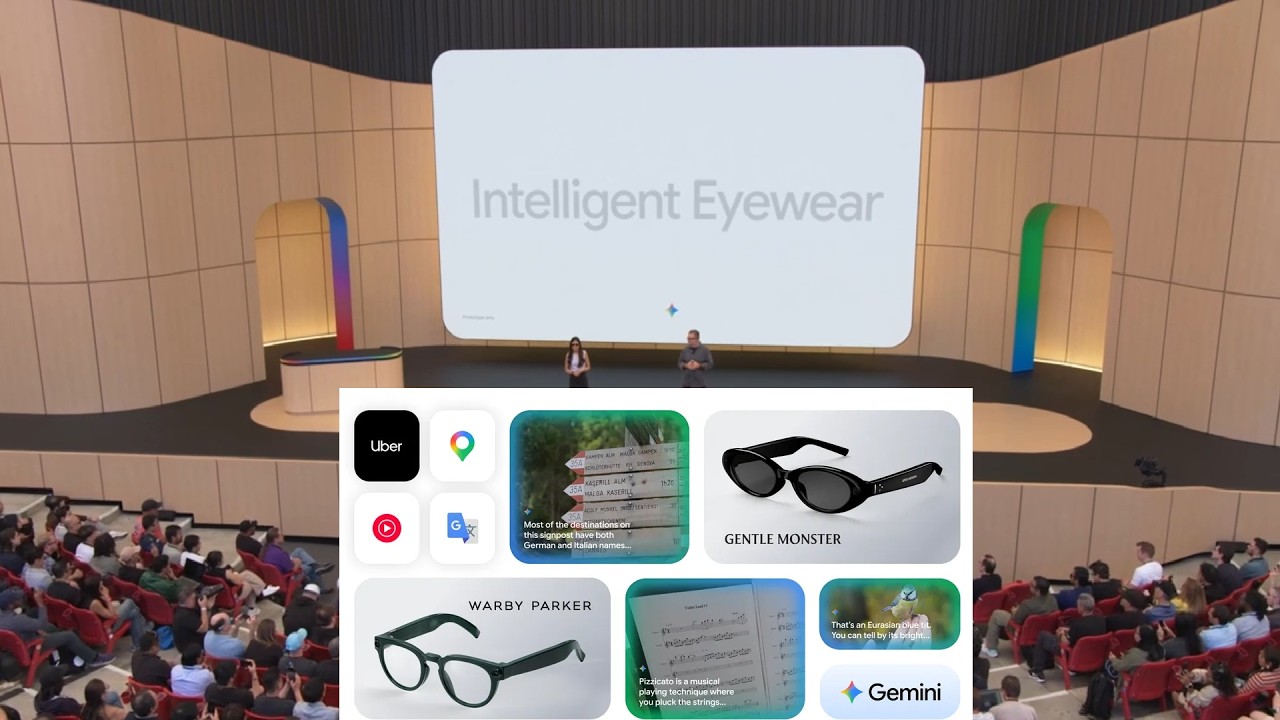
The future of wearable technology just took a major leap forward.
At Google I/O 2026, Google and Samsung unveiled a new generation of intelligent AI-powered glasses built on Android XR and powered by Gemini. Designed to seamlessly blend cutting-edge technology with everyday style, these smart glasses promise hands-free assistance, real-time intelligence, and immersive experiences without pulling users away from the world around them.
Android XR: AI Built for Wearables
Google introduced Android XR as a new platform developed in partnership with Samsung and optimized for Snapdragon processors with Qualcomm. The platform combines advanced hardware with Gemini AI to deliver contextual assistance directly through wearable devices such as headsets and smart glasses.
According to Google, the goal is simple: provide helpful, intelligent support in the moment without disrupting daily life.
Two Types of AI Glasses
Google revealed that the Android XR ecosystem will support two categories of intelligent eyewear:
1. Display Glasses
These glasses feature a small in-lens display that delivers glanceable information right in front of the user’s eyes.
Potential use cases include:
- Live language translations while traveling
- Uber pickup details
- Navigation prompts
- AI-generated widgets and personalized information
Developers are already building experiences for the display glasses platform, with Google planning to expand its trusted tester program later this year.
2. Audio Glasses Launching This Fall
The first consumer-ready product arriving this fall will be audio-based smart glasses.
Instead of using a visible display, Gemini communicates privately through audio directly into the user’s ears. The glasses are designed for all-day wear and hands-free convenience.
Features demonstrated include:
- Listening to music
- Taking photos
- Making calls
- Navigating with Google Maps
- Interacting with apps without touching a phone
- AI-powered task automation
Importantly, the glasses will support both Android and iOS devices.
Fashion Meets Technology
A major focus of the announcement was design.
Google partnered with premium eyewear brands:
- Gentle Monster
- Warby Parker
The companies showcased stylish frames designed to look and feel like modern fashion eyewear rather than bulky tech products.
Executives emphasized that intelligent eyewear should not only be functional but emotionally appealing and confidence-inspiring.
Samsung also highlighted the engineering challenge behind fitting advanced AI hardware into lightweight, wearable frames where “every millimeter counts.”
Live Demo Showcases Gemini in Action
One of the most impressive parts of the presentation was a live demonstration of Gemini-powered smart glasses.
During the demo, the glasses were able to:
Smart Navigation
A user asked Gemini to navigate to a location based on a previous meeting with a friend. Gemini understood the context and automatically launched walking directions.
Voice-Controlled Ordering
Using natural language, Gemini opened DoorDash on the connected phone, selected a usual coffee order, completed the checkout process, and prepared the order for confirmation — all hands-free.
Message Summaries and Calendar Integration
Gemini summarized missed messages from a muted family group chat and automatically added a dinner event to the user’s calendar.
AI Camera and Image Generation
In a crowd selfie moment, Gemini captured a photo and transformed it into a stylized cartoon image with a custom “Google I/O 2026” blimp graphic in seconds.
The generated preview was then displayed seamlessly on a connected smartwatch.
A New Era of Intelligent Eyewear
Google positioned these glasses as the next major milestone for Android XR and AI-assisted computing.
By combining:
- Samsung’s hardware engineering
- Fashion-forward eyewear partners
- Gemini AI capabilities
- Android XR software
- Google’s app ecosystem
…the companies are aiming to redefine how people interact with technology throughout the day.
The first Android XR audio glasses are expected to launch this fall, with additional designs and display-based models planned for the future.
Final Thoughts
The smart glasses race is entering a new phase — one focused less on novelty and more on practical, everyday usefulness.
Rather than replacing smartphones entirely, Google and Samsung’s vision centers on creating ambient, wearable AI that quietly assists users throughout the day.
If the live demos are any indication, intelligent eyewear may soon become one of the most important consumer tech categories of the next decade.