Over 15 years ago, Google introduced the Chromebook, a lightweight laptop designed for a cloud-first world. It focused on simplicity, speed, and web-based computing through ChromeOS.
Now, Google is preparing to redefine laptops once again — this time with intelligence at the center.
The company is introducing a new category of devices called Googlebook, which represents a major shift from traditional operating systems to what Google calls an “intelligence system” powered by Gemini AI.
While full OS details have not yet been revealed, Google has confirmed that Googlebook will combine elements of Android and ChromeOS technologies, creating a modern, AI-first computing experience.

💡 What is Googlebook?
Googlebook is a new generation of AI-powered laptops designed from the ground up for Gemini Intelligence. Unlike traditional laptops, these devices are built to actively assist users, automate tasks, and provide contextual help in real time.
According to Google, Googlebook represents a shift from:
“an operating system to an intelligence system”
This means the laptop will not just run apps — it will understand what you’re doing and help you complete tasks faster.
⚙️ Key Features of Googlebook AI Laptops
🤖 1. Gemini Intelligence Integration
Googlebook is deeply powered by Gemini AI, making it capable of:
- Understanding on-screen content
- Suggesting actions automatically
- Assisting in real-time productivity tasks
- Providing proactive recommendations
🖱️ 2. Magic Pointer (AI Cursor Revolution)
One of the most innovative features is Magic Pointer, developed with Google DeepMind.
Instead of a normal cursor, users can:
- Wiggle the cursor to activate AI assistance
- Get contextual suggestions instantly
- Perform actions directly from on-screen elements
Example:
- Select a date in an email → instantly schedule a meeting
- Select two images → visualize them together
- Highlight content → get smart AI actions

🧩 3. Create Your Widget (AI Desktop Personalization)
Googlebook introduces AI-generated widgets.
With a simple prompt, Gemini can:
- Build custom dashboards
- Pull data from Gmail, Calendar, and web
- Organize travel plans, schedules, and reminders
Example:
Planning a trip?
Gemini can create a widget showing:
- Flights ✈️
- Hotel bookings 🏨
- Restaurant reservations 🍽️
- Countdown timer ⏳
All in one place.

📱 4. Deep Android Ecosystem Integration
Googlebook is designed to work seamlessly across devices.
Features include:
- Running Android apps natively
- Quick app continuation between phone and laptop. Cast My Apps

- No interruption workflow switching
- Instant access to mobile apps on desktop
📂 5. Quick Access File System
Users can directly access phone files from their laptop:
- Search mobile files instantly
- Insert files without transferring
- No manual syncing required
This creates a truly unified ecosystem between phone and laptop.

💻 6. Premium Hardware Design
Google is partnering with major manufacturers including:
- Acer
- ASUS
- Dell
- HP
- Lenovo
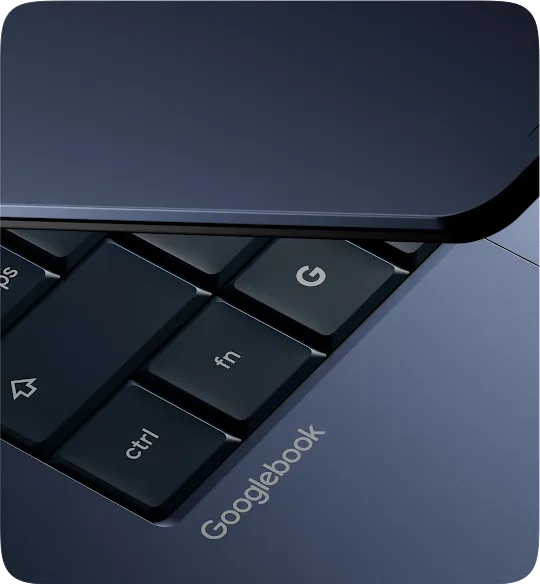
Each Googlebook device will feature:
- Premium materials and build quality
- Multiple form factors (ultrabooks, hybrids, etc.)
- A signature “glowbar” design element

⚠️ Important: No Operating System Details Yet
Despite strong speculation, Google has NOT officially confirmed:
- The exact name of the operating system
- Whether it is fully Android-based or a new hybrid OS
- Final technical architecture
However, it is expected to be a combination of:
- Android technology stack
- ChromeOS foundation
- A new AI-first interface layer powered by Gemini
Internally, this system is believed to be part of a next-gen platform often referred to as a ChromeOS + Android fusion project — but nothing is officially confirmed.
🔮 Googlebook vs Chromebook: What’s Changing?
| Feature | Chromebook | Googlebook |
|---|---|---|
| Core System | ChromeOS | AI Intelligence System |
| AI Integration | Limited | Deep Gemini AI |
| App Support | Web + Android apps | Advanced Android + AI workflows |
| User Experience | Manual | Proactive AI assistance |
| Desktop | Static | AI-generated widgets + dynamic UI |

🚀 Final Thoughts
Googlebook represents a major shift in computing — moving from traditional operating systems into AI-driven intelligent environments.
Instead of just opening apps, users will interact with a system that:
- Understands intent
- Automates workflows
- Connects devices seamlessly
- Acts as a real-time assistant
While full OS details remain unknown, one thing is clear:
👉 Google is no longer building laptops just for computing — they are building laptops for intelligence.